The science behind every formulation.
From milk fermented with kefir grains to the chemistry of moisturizing, cleansing, and conditioning. Explore the reasoning behind Sierra Cosmetics and our BioActive Cosmetics collection.
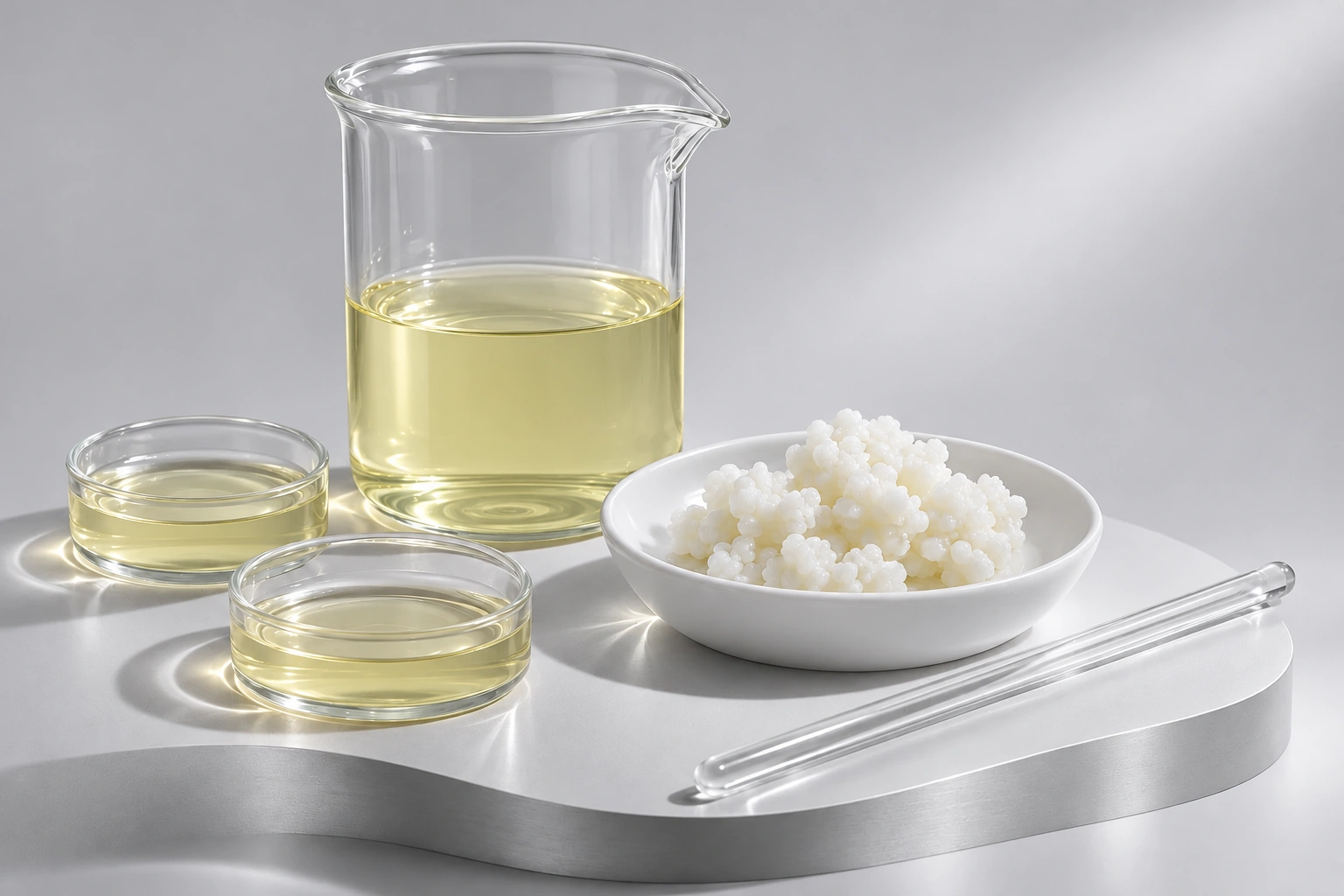
Milk. Kefir grains. A chemical transformation.
Milk supplies the starting proteins and other nutrients. The microorganisms in kefir grains drive fermentation. Collection and purification then prepare the whey fraction for formulation.
What changes during fermentation?
Enzymes break milk proteins into smaller fragments called peptides. Further breakdown can release amino acids. At the same time, microorganisms use and exchange compounds as the milk ferments.
Peptidomic research, which maps the peptides in a sample, has documented extensive changes to milk proteins during fermentation with kefir grains. The milk, microbial community, and processing conditions all help shape the resulting composition.
Explore the peptide analysisWhy collect and purify the whey?
The separated liquid provides a way to work with compounds present in the whey fraction. Purification prepares that material for use as an ingredient.
A sample of whole fermented milk and a purified whey ingredient are different materials. Measuring the material used in a formula connects its composition to its intended function. Published mineral research illustrates how composition can differ among kefir, whey, and other separated fractions.
Read about whey compositionUnderstand the components.
Peptides, amino acids, other metabolites, vitamins, and minerals each have their own chemistry. Knowing a compound’s identity is the starting point for understanding its function.
Peptides: sequence matters.
Peptides are chains of amino acids. Their sequence, size, charge, and concentration influence how they behave. Studies of milk fermented with kefir grains have identified many peptides released from milk proteins.
Researchers can compare these sequences with previously studied peptides or test a sample directly. Those methods answer different questions. Our library identifies when a finding comes from composition analysis and when an activity was measured.
Read the peptide profiling studyAmino acids: building blocks and shared resources.
Amino acids are the building blocks of proteins and peptides. During milk fermentation with kefir grains, protein breakdown and microbial metabolism change how these building blocks are available.
Research has shown that members of a kefir community exchange resources, including amino acids and lactate. This helps explain why the ingredient begins with an interacting microbial community and a nutrient source working together.
Explore microbial cooperationMetabolites: study the compound and its activity.
Metabolites are compounds produced or transformed through biological activity. In fermentation research, scientists examine both what is present and how selected samples behave in an assay.
A 2026 study measured antioxidant activity in peptide extracts from cow and goat milk kefir, including samples collected before simulated digestion. These chemical assays offer a basis for further formulation research. Delivery to skin and performance in a finished cosmetic call for their own measurements.
Read the antioxidant researchVitamins and minerals: composition has a source.
Milk supplies vitamins and mineral elements. Fermentation can change the vitamin profile as microorganisms produce, use, or transform compounds. A study using ten kefir grain cultures found that changes in selected vitamins differed with the milk species.
Mineral elements originate in the starting materials. Fermentation and separation can change their distribution among fractions. That is why information about a purified ingredient should reflect the material being used.
Explore vitamin compositionEvery ingredient has a purpose.
A cosmetic formula brings complementary functions together. Ingredient identity, concentration, compatibility, pH, and stability all matter to the finished experience.
Moisturizing: hydration, softness, and water retention.
Moisturizer design considers several functions. Humectants help retain water. Emollients contribute to a smooth, soft skin feel. Occlusive ingredients can reduce water loss from the surface.
In one human study, researchers compared a cream with versions containing glycerol or petrolatum. The findings illustrate how hydration and reduced water loss can make distinct contributions within a formula. The examples explain ingredient roles; the complete ingredient declaration belongs on each product page.
Read the topical hydration studyCleansing: helping oil and residue rinse away.
Surfactants help water interact with oily material and assist its removal during rinsing. A cleanser combines its surfactants and supporting ingredients around the intended application, whether that is the scalp, hair, or body.
Formulation also considers how surfactants interact with skin proteins and lipids. A review of skin cleansing research explains how the complete system can balance cleansing with attention to the skin barrier.
Explore skin cleansing scienceConditioning: surface feel and manageability.
Conditioning ingredients can improve lubrication, reduce static, and help hair fibers move past one another during combing. Those surface effects contribute to softness, manageability, and shine.
Researchers can assess conditioning with instrumental measurements. One study found fewer substantial combing loads after conditioner was added to the bleached hair samples tested. This is an example of connecting a familiar benefit to a measurable endpoint.
Read the combing studypH: one part of the formulation.
pH describes how acidic or alkaline an aqueous system is. It belongs in the assessment of ingredient compatibility and the interaction between a formula and its application site.
A laboratory hair study found that very acidic and alkaline exposures produced more structural changes than the intermediate conditions tested. The scientific question is which pH fits the complete formula and its intended use.
Explore the hair pH studyStability and preservation: performance over time.
The quality of a cosmetic includes how it behaves during storage and use. Formula stability, packaging, and protection against microbial contamination are part of that assessment.
Microbial protection concerns the finished product. It is evaluated alongside physical properties such as texture, appearance, and separation. FDA guidance explains how preservation, packaging, storage, and consumer use influence cosmetic quality.
Read FDA’s cosmetic shelf life guidanceThree products. Distinct formulation goals.
BioActive Cosmetics is our flagship luxury cosmeceutical brand. Its fragrance free collection brings our signature ingredient into three familiar applications, each with a defined purpose.
BioLotion
The formulation focus is moisturizing: skin hydration, softness, and a comfortable skin feel. The science of a lotion connects the featured ingredient with the supporting functions of the complete formula.
Explore the hydration research to understand how water retention and surface feel are evaluated in cosmetic science.
Explore BioLotionBioHair Care
The formulation focus is cleansing and conditioning in one application. Shampoo + Conditioner brings together removal of oil and residue with care for softness, manageability, and shine.
Hair formulation research examines surface lubrication, combing forces, and pH. These are useful ways to connect the intended experience to measurable properties.
Explore BioHair CareBioBody Wash
The formulation focus is everyday body cleansing with attention to skin comfort and freshness. Cleansing science explains how surfactants assist the removal of oil and residue during rinsing.
The complete formula brings the cleansing system, our featured ingredient, and supporting ingredients together for the intended washing experience.
Explore BioBody WashRead the finding. Examine the source.
Explore published studies on milk fermented with kefir grains, peptides released from milk proteins, microbial metabolites, and related skin science. Every entry connects a clear scientific takeaway to its publication.
Explore the Scientific Library